
Despite their striking visual appeal, long-coated dogs require a high level of care.
If you work with Shih Tzus, Maltese, Yorkies, Afghans or Tibetan Terriers on a daily basis, you will already be aware of how quickly a beautiful, flowing coat can become a dense mass of tangles and matted undercoat when maintenance is neglected, even slightly.
Managing a true long coat requires specific techniques, consistent routines and the right tools.
In this guide, you will find essential methods and tools for keeping long coats healthy, manageable and show-ready, ranging from the fundamentals of line brushing to the most effective tools for detangling, finishing, drying and daily maintenance.
What is a long coat (drop coat) in dogs?
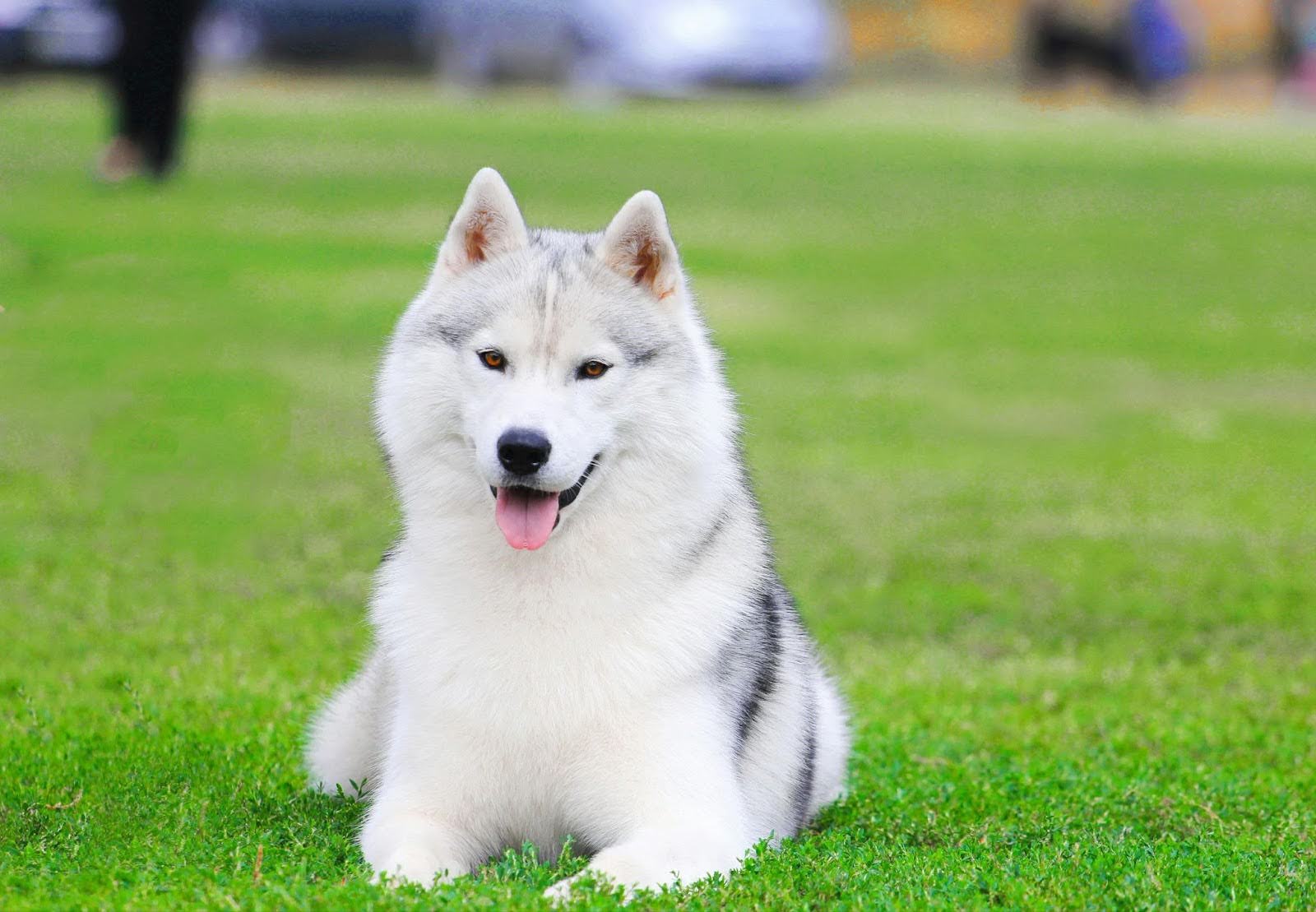
A long coat, often referred to as a drop coat, is a type of coat that grows continuously and falls straight down the dog’s body, sometimes reaching the floor. While these coats can range in texture from ultra-silky and fine (Maltese, Yorkshire Terrier) to heavier and more coarse (Afghan Hound, Tibetan Terrier), they all require constant, structured maintenance.
Long coats don’t shed in the same way that double coats do. Dead hair tends to remain trapped close to the skin, which is why dogs with drop coats are more prone to knots, a compacted undercoat and deep matting if they are not brushed thoroughly and regularly. Their texture also makes them highly reactive to friction, humidity and the use of incorrect products, all factors that can damage the cuticle and lead to breakage.
Which dog breeds have long or drop coats?
Long or drop coats can be found in many breeds, ranging from small companion dogs to large pastoral breeds. They all have coats that grow continuously and have a naturally falling structure. If not maintained correctly, they are genetically predisposed to matting.
Here are some of the most common long-coated breeds that you will work with in the grooming studio:
- Shih Tzu: dense, flowing coat that tangles easily at the roots. Requires meticulous daily brushing;
- Lhasa Apso has strong, heavy hair with a natural parting along the back. Often prone to compact matting on the legs and belly;
- Maltese: ultra-fine, silky, single coat. Beautiful, but extremely delicate, and prone to breakage without proper conditioning;
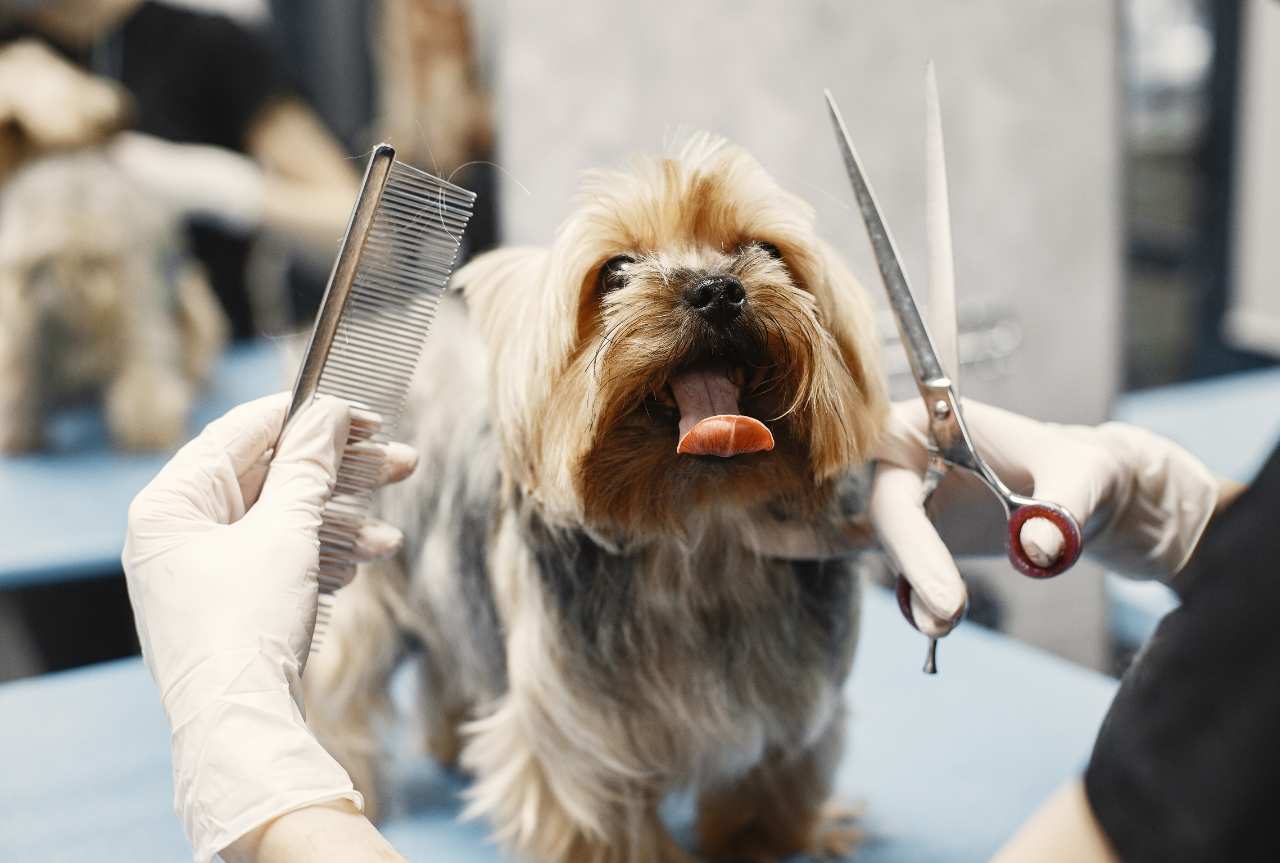
- The Yorkshire Terrier’s hair behaves almost like human hair, with continuous growth and a need for conditioning to maintain shine;
- The Havanese has a light, soft coat that can form wisps or compact knots depending on the environment and handling;
- The Coton de Tuléar has a cloud-like texture with high volume and is prone to felting if not brushed in layers;
- The Afghan Hound has an iconic long coat with a silky texture that requires impeccable drying and brushing techniques to avoid breakage;
- The Tibetan Terrier has a thick, protective coat that was originally developed for cold climates, but it can trap debris easily;
- The Bearded Collie has a harsh, dense coat with a soft undercoat and is extremely prone to root matting without line brushing;
- The Old English Sheepdog has a long, shaggy double coat that must be properly maintained to avoid severe matting.
The role of coat genetics
The length, texture, density and shedding pattern of a coat are determined by genetics, which influence how the hair grows, how quickly it mats and how much maintenance it requires.
For long and drop coats:
- Hair does not shed normally, so dead hair accumulates on the skin;
- The coat has a long anagen phase, meaning continuous growth;
- The texture (silky vs woolly) determines how quickly knots form;
- A soft undercoat combined with a long outer coat dramatically increases the risk of matting.
Essential grooming techniques for long coats
To keep these coats healthy, free from mats and smooth, a combination of professional salon work and a consistent home routine is needed. This routine must be taught (and reinforced) to clients.
Read on to learn how to groom long coats with technique, intention and the right tools.
READ ALSO:
Understanding the risks of slicker burn and how to prevent it during grooming
Best slicker brush for poodles: choosing the right grooming tools for your clients
The importance of regular brushing
For long or drop coats, brushing is the most important factor in preventing matting and maintaining coat integrity. Such coats grow continuously, trap moisture easily and tend to twist around themselves, particularly in areas of friction. If brushing is inconsistent, the coat will compact quickly and light tangling can become a solid mat within days.
Effective long-coat care starts with line brushing. Rather than skimming the surface, you work methodically from the skin outwards, lifting sections of coat and brushing in controlled, deliberate strokes. A curved slicker brush with pins of an appropriate length for the coat texture offers the precision required to reach the undercoat without scraping the skin. Once each section has been opened, a comb should glide through it effortlessly: this confirms that the coat is genuinely knot-free and not just fluffed on the surface.
It is very important to support the skin with your free hand. This stabilises the area you are brushing, reduces tension, and prevents unnecessary pulling. This makes the process safer and more comfortable for the dog. This technique is particularly important in areas that mat quickly, such as around the ears, in the armpits, along the belly, inside the thighs, and anywhere the coat rubs against collars or harnesses. Even the most compliant dogs will develop tight tangles in these areas if brushing becomes irregular.

Bathing and conditioning
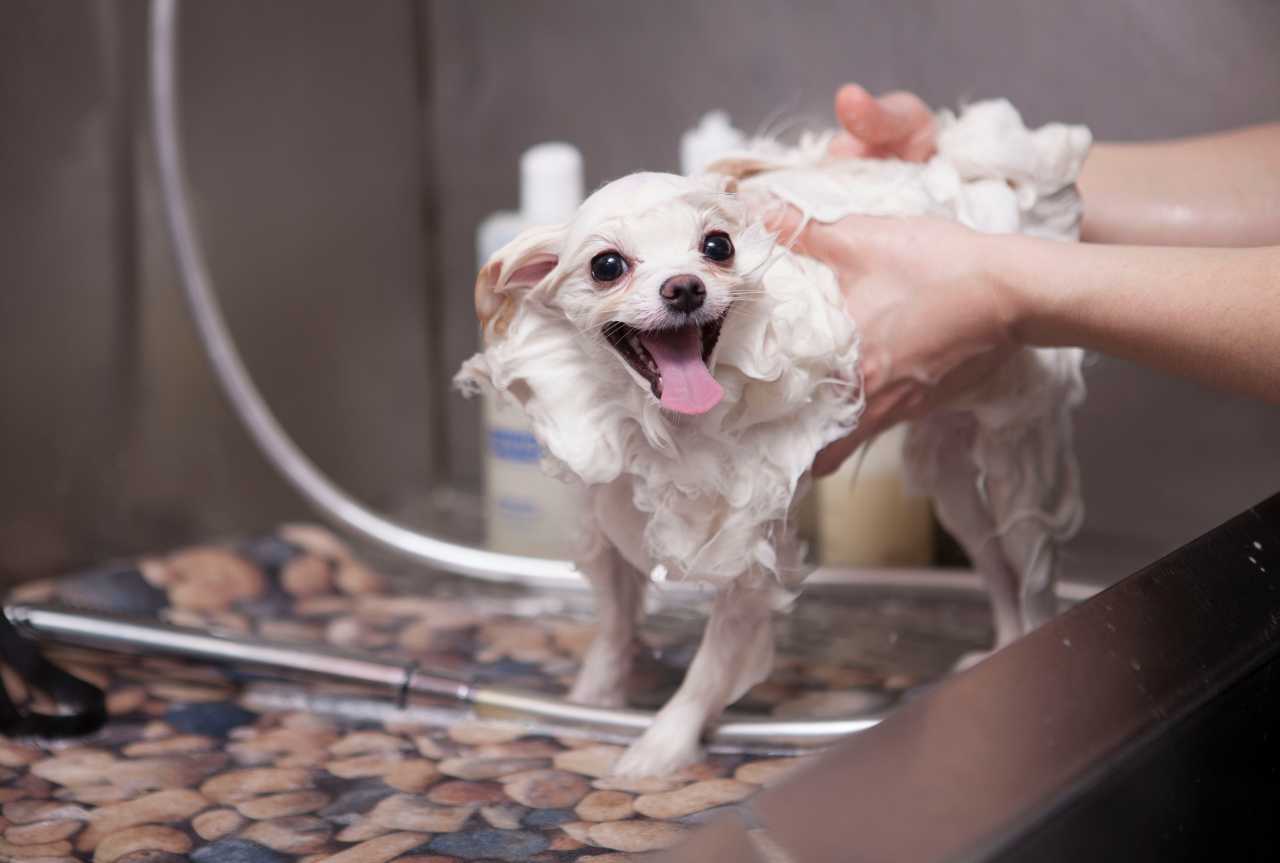
How you bathe and condition the coat will determine how easily you can brush, dry and finish it afterwards. Hydration, slip and cuticle protection are the priorities.
Long coats should always be washed with gentle, replenishing formulas that respect the coat’s natural oils. Silky and drop coats are especially vulnerable to dryness; when the cuticle becomes rough, friction increases and mats form more easily. For this reason, clarifying products or harsh cleansers should only be used on long coats if absolutely necessary.
Conditioners and anti-static sprays are essential. They reinforce the hair shaft, adding elasticity and creating the slip required for safe brushing. They also prevent the static charge that builds up during drying, which is a major cause of tangling. A well-conditioned coat behaves differently under the brush; rather than dragging or catching, your slicker will glide through the coat, lifting it cleanly without putting unnecessary tension on the skin.
To get the best results, remember these important things:
- Use moisturising shampoos designed for long, silky or drop coats;
- Apply a rich conditioner to restore elasticity and reduce friction;
- Spray anti-static or detangling spray before and during brushing;
- Blot the coat dry gently instead of rubbing it with a towel;
- Never blow-dry a tangled coat, the mats will tighten and become compacted;
- Avoid high heat, as this lifts the cuticle and encourages frizz.
Cutting and styling options
Styling a long or drop coat is never one-size-fits-all. Your approach should strike a balance between three factors: the breed standard, the dog’s lifestyle and the owner’s ability to maintain the coat at home. As a groomer, your role is to guide each client towards a style that is both beautiful and practical for their lifestyle.
Knowing when to clip and when to scissor is key.
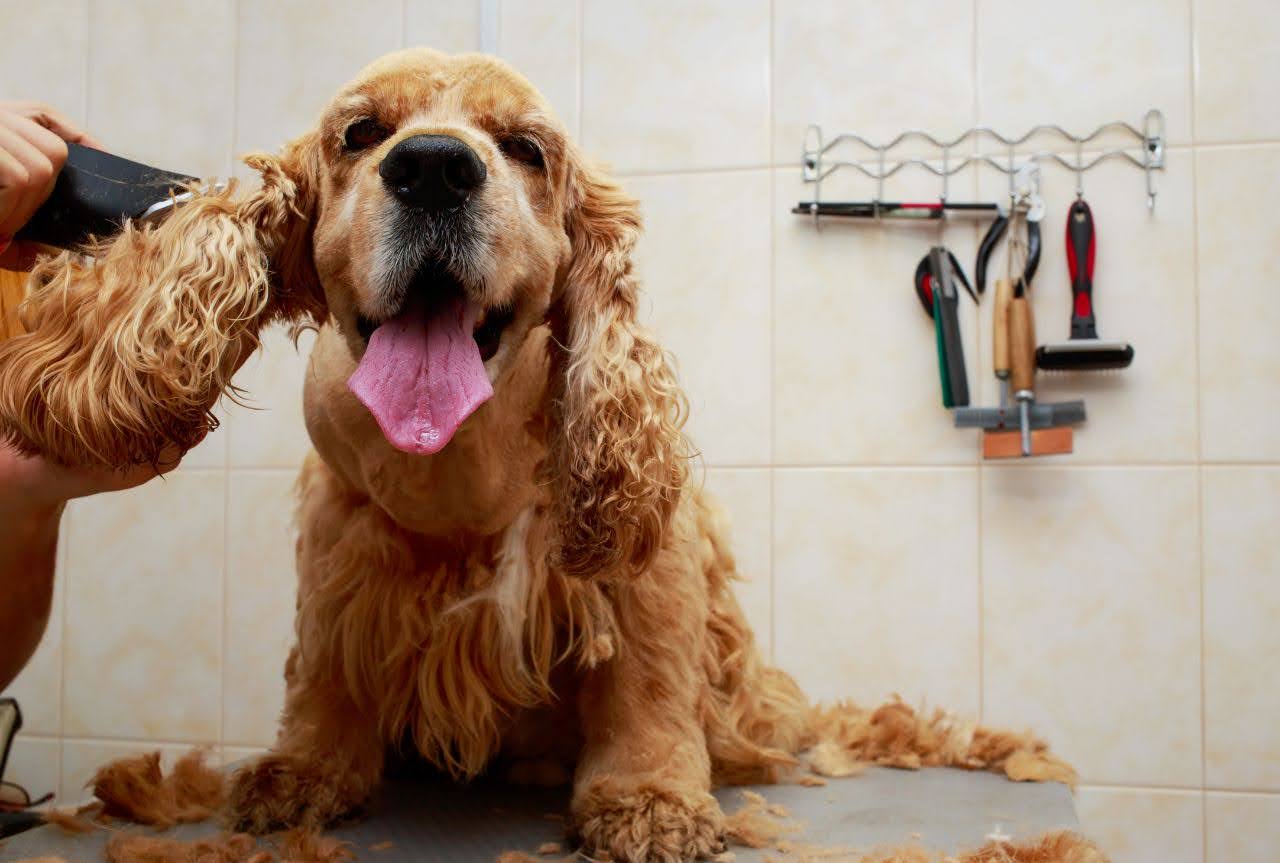
Clipping is ideal for active dogs, owners with limited time or damaged coats. However, it should be done thoughtfully, as long coats lose their natural flow when clipped too short. Scissoring preserves the coat’s shape, fullness, and integrity, making it the preferred method for owners who want a more refined look.
As a rule of thumb:
- Use clippers for ease of maintenance, in the warmer months, or on heavily matted coats;
- Use scissors for a tailored outline, coat control and breed expression;
- Blend both techniques when you need structure without sacrificing softness;
- Maintain the cut between sessions.
Even the best trim won’t last if the home routine is neglected. Educate owners on:
- Daily brushing (ideally line brushing);
- How to handle friction areas (collar line, armpits and legs);
- When to schedule baths;
- When to come back before mats set in.
Finishing and detailing
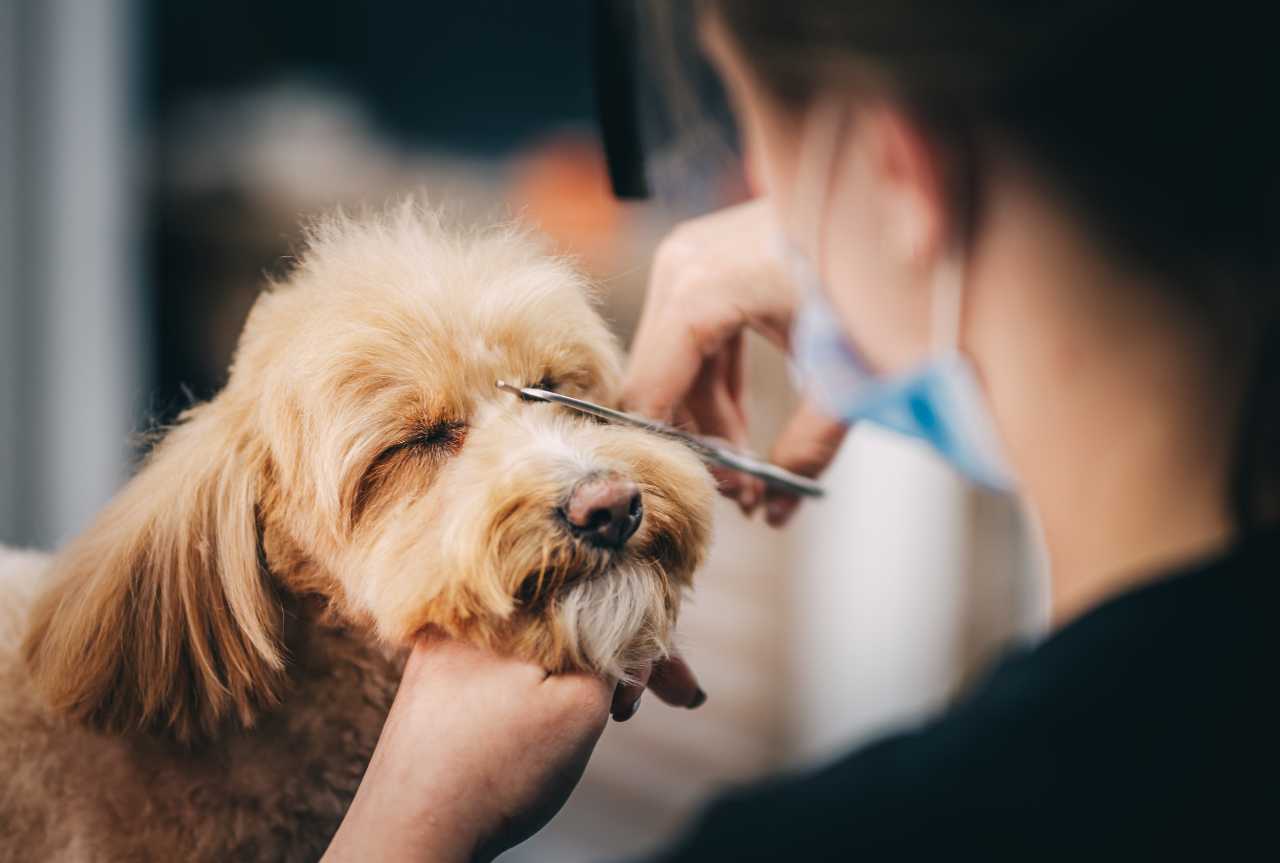
Finishing a long or drop coat requires a blend of technique and artistry. After detangling, brushing and shaping, it is the final detailing work that transforms a good groom into a polished, show-worthy result, even for a pet trim. This phase requires patience, precision, and an eye for symmetry.
Face and eye area
Long-coated breeds often accumulate debris and tear staining around the eyes. Keep this area clean, airy and clearly visible by:
- Gently separating long facial furnishings;
- Using thinning shears to lighten heavy corners;
- Lifting and tidying hair that obstructs vision;
- Educate owners on how to maintain this area daily.
Paws, legs and sanitary zones
Detailing the feet and sanitary areas keeps the dog cleaner and more comfortable between grooming sessions, which is essential for long coats that trap dirt, moisture and debris.
Focus on:
- Trimming excess fur around paw pads and toes;
- Smooth feathering without losing length;
- Maintaining sanitary hygiene with clean, discreet trims;
- Checking the skin for irritation hidden under long hair.
Even a beautiful coat will look unkempt if the feet are messy or if sanitary areas are neglected, so this step is essential.
Products for shine and definition
Finishing sprays, hydrating mists and light shine enhancers add the final touch that owners (and judges) instantly notice. Choose formulas that enhance movement without weighing the coat down.
The essential tools for managing a long coat
Working on a long or drop coat requires a balance of penetration, glide and precision and Minelli PETS tools are designed with this in mind.
The primary instrument is always the slicker brush, which should be chosen with the correct pin length for the coat in question: short pins for smooth or fine coats, long pins for silky or dense coats, and long and dense pins for thick, fluffy or heavily matted undercoats. The curved heads of our Pro Care Antibacterial and Pro Grip Wood slicker brushes naturally follow the contours of your dog’s body, and their pin layout lifts, separates and detangles the coat all the way down to the skin.
Once you have finished using the slicker brush, you can move on to precision combs: the Detail Mini Comb is ideal for delicate areas such as the ears and muzzle, while the Medium Comb is perfect for everyday grooming and the Large Comb is great for longer sections on larger breeds. Combs ensure that the coat is fully detangled and help you to detect early matting before it becomes a problem.
For daily maintenance or finishing work, a pin brush is essential.
Our Heat Guard version has silicon-coated stainless steel pins to protect the coat during drying and reduce frizz. The Sensitive Skin model has high-density plywood pins and is perfect for dogs that cannot tolerate metal.
During the drying phase, a vent brush is invaluable: the Heat Guard Vent Brush speeds up airflow and directs the coat smoothly.
If you want tools engineered for precision, durability and daily professional use, explore the full Minelli PETS collection and elevate your long-coat grooming results. Discover our tools.